
Product
Is DropsTab a Scam? How Scammers Fake Portfolios
Scammers have started impersonating DropsTab by faking portfolios, fees, and support calls. Here’s how these schemes work, how to verify what’s real, and how we protect users.
Quick Overview
- DropsTab never holds funds — scammers fake portfolios to claim otherwise.
- Any “DropsTab support” call, fee, or urgent warning is an impersonator.
- Fake dashboards, screenshots, and cloned sites are the core scam props.
- You can verify real communication easily: check domains, ignore calls, use dropstab.com.
- DropsTab actively removes abusive accounts, issues warnings, and shares scam intel with the community.
Rise of Impersonation Scams (2024–2025)
Crypto impersonation scams exploded across 2024–2025 as fraud groups shifted from sketchy fake apps to polished social-engineering plays. Pig-butchering networks ballooned, fake “investment platforms” multiplied, and support-impersonation calls became the default attack vector.
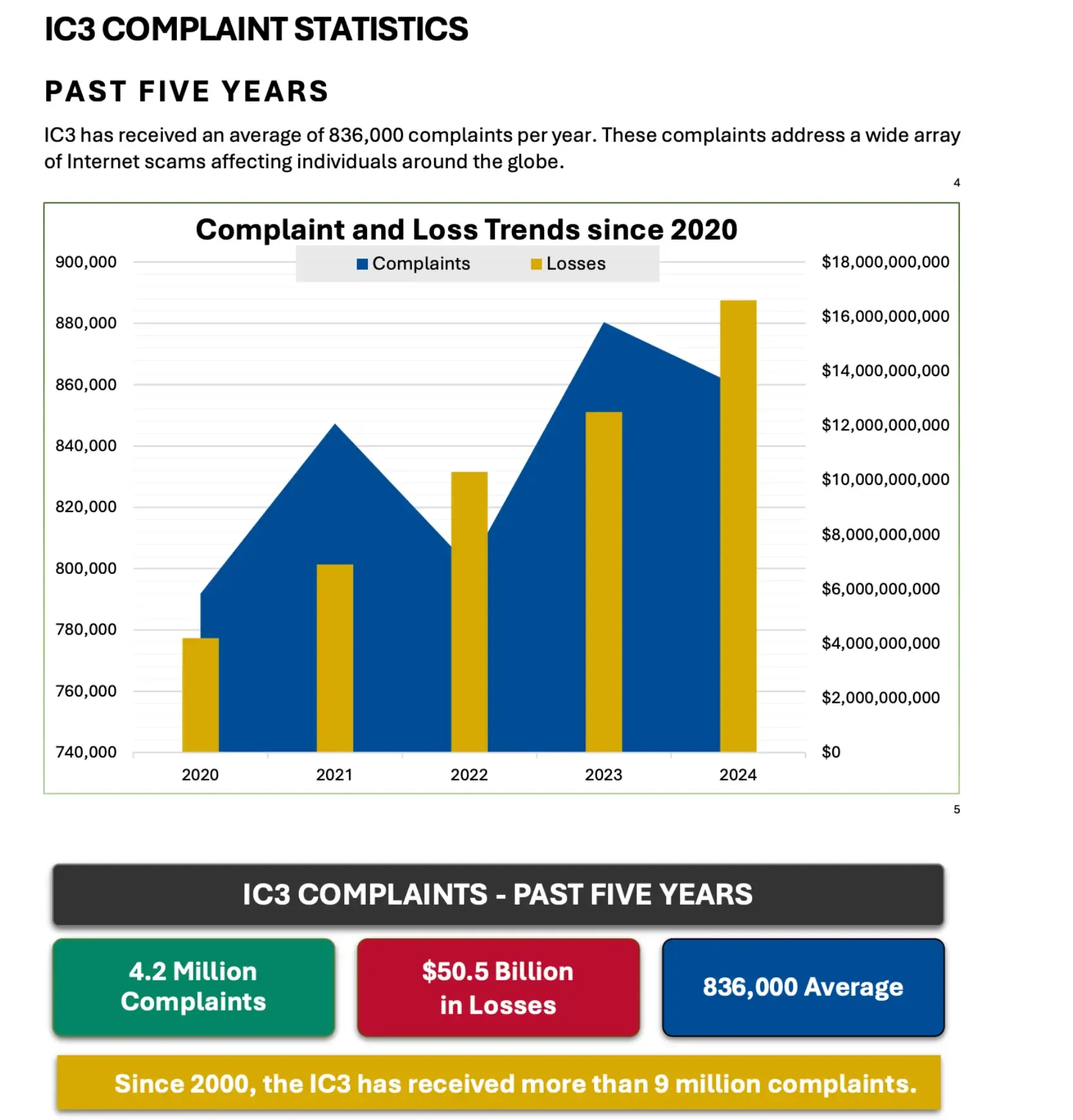
By late 2024 we started seeing our own name slip into these scripts, which is why we issued our first security warning at the time.
Through mid-2025, multiple DropsTab users reported calls about “dormant” accounts supposedly holding Bitcoin — a story that makes no sense on a platform that doesn’t store funds.
Law-enforcement agencies worldwide kept dismantling massive fraud rings, some stealing hundreds of millions through lookalike dashboards, underscoring a simple truth:
This trend isn’t isolated, and scammers increasingly rely on impersonating trusted tools like ours to make their pitch sound legitimate.
How DropsTab Actually Works
DropsTab is a crypto tracker, not a trading platform — and that simple detail is exactly what scammers try to twist. We don’t hold money, approve withdrawals, freeze accounts, unlock balances, or verify anyone’s identity. Nothing moves through us.
What we are: a data dashboard.
Users log whatever coins or trades they want to track — manually. Think of it like a portfolio notebook with charts. Think of it like a portfolio notebook with charts. Essentially, all of our portfolios - are demo accounts. Users use them to keep track of whichever asset they wish to follow.
Because entries are user-created, a balance inside DropsTab is not evidence of real funds. Scammers lean on that misunderstanding by creating fake portfolios, adding big numbers, and telling victims those are “locked” assets waiting to be released for a fee.
You sign up with just an email. No deposits, no KYC, no bank cards, no API keys, no wallet connections. Since we never receive your assets, there’s nothing for us to freeze or “activate.”
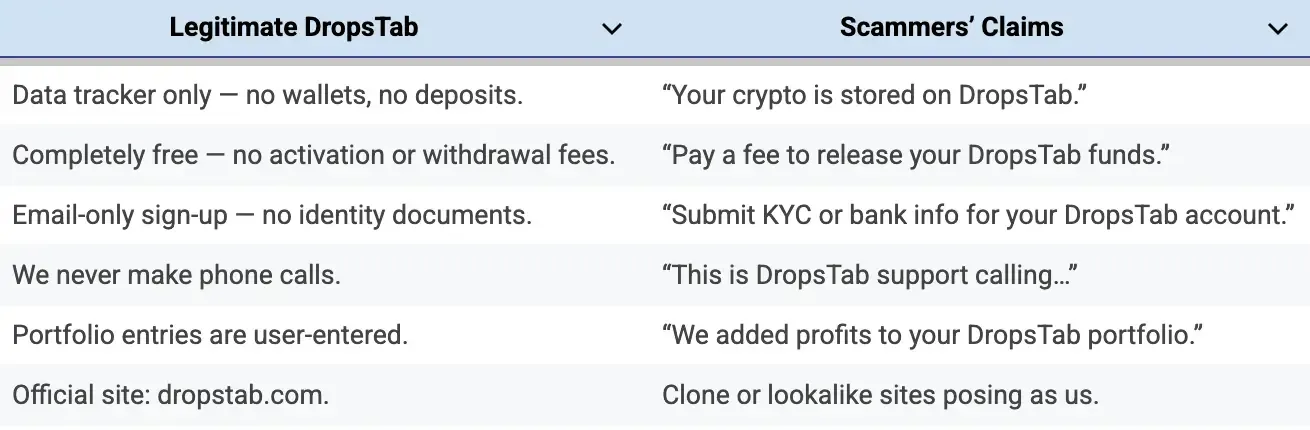
Real DropsTab vs. Scam Claims
Why Scammers Use DropsTab as “Proof”
Scammers piggyback on DropsTab for one simple reason: it looks trustworthy. People recognize the name, the charts look familiar, and a clean dashboard with your email on it feels more legitimate than a sketchy site you’ve never seen before.
Since portfolios on DropsTab are fully manual, a scammer can create an account in minutes, type in any balance they want, and present it as “evidence” of profits or frozen funds. Screen shares, screenshots, or even handing over a login make the illusion stronger — victims feel like they’re seeing real holdings on a real platform.
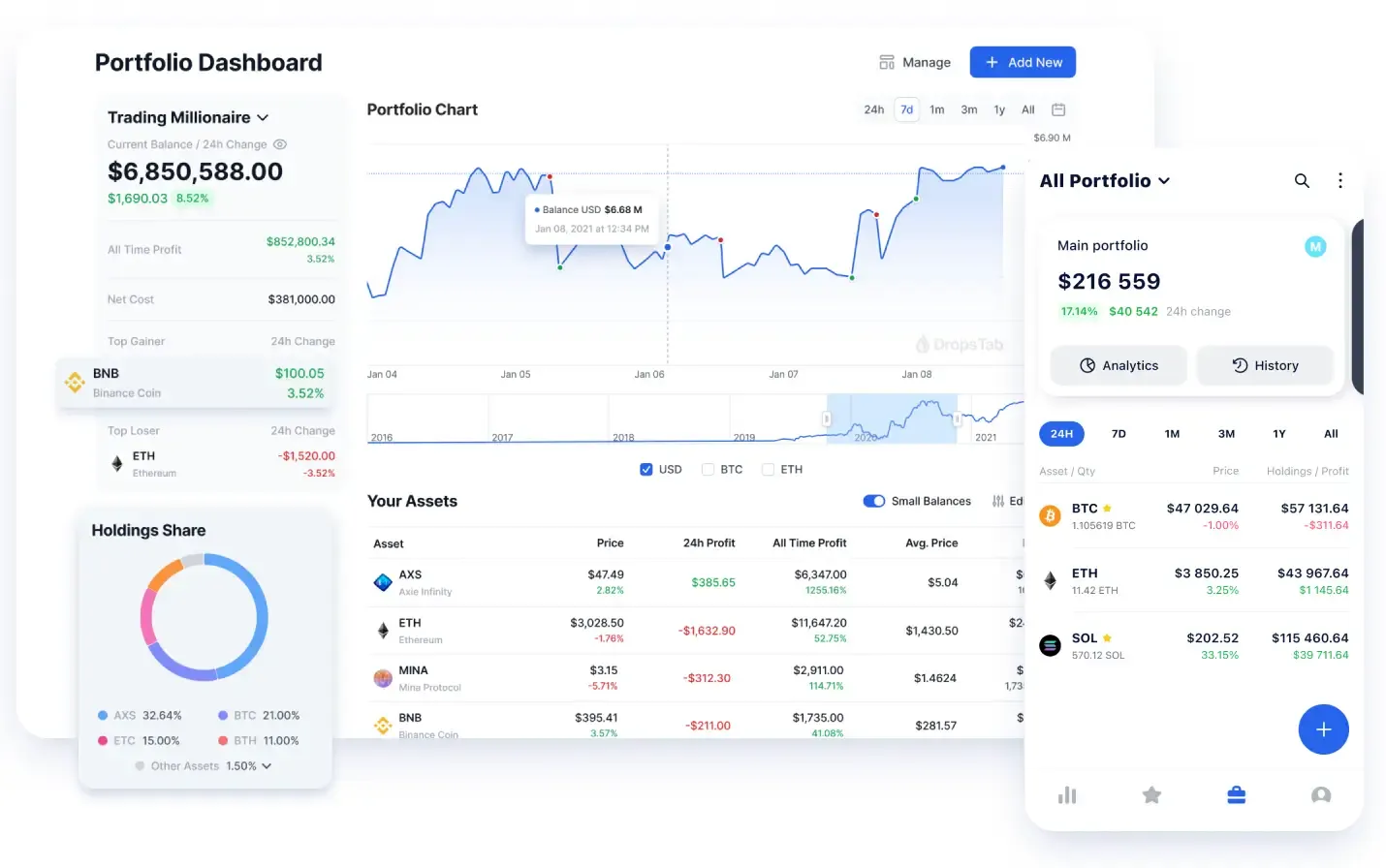
That moment of “Maybe this is mine…” is exactly what scammers aim for. And because they can use our interface without building anything themselves, it becomes an easy prop inside a much larger social-engineering playbook.
Anyone claiming DropsTab froze your account, found money for you, or needs a payment to “unlock” crypto is impersonating us — full stop.
Common Scam Scripts Using DropsTab
1. Fake “Withdrawal Fee” or Dormant Account Scams
Scenario:
You get a call or email claiming there’s a DropsTab portfolio in your name with a big crypto balance, but it’s “suspended” or “dormant.” To unlock it, you’re told to pay a small “withdrawal fee” or “activation charge” — usually a percent of the alleged balance. It sounds almost reasonable, which is why it works.
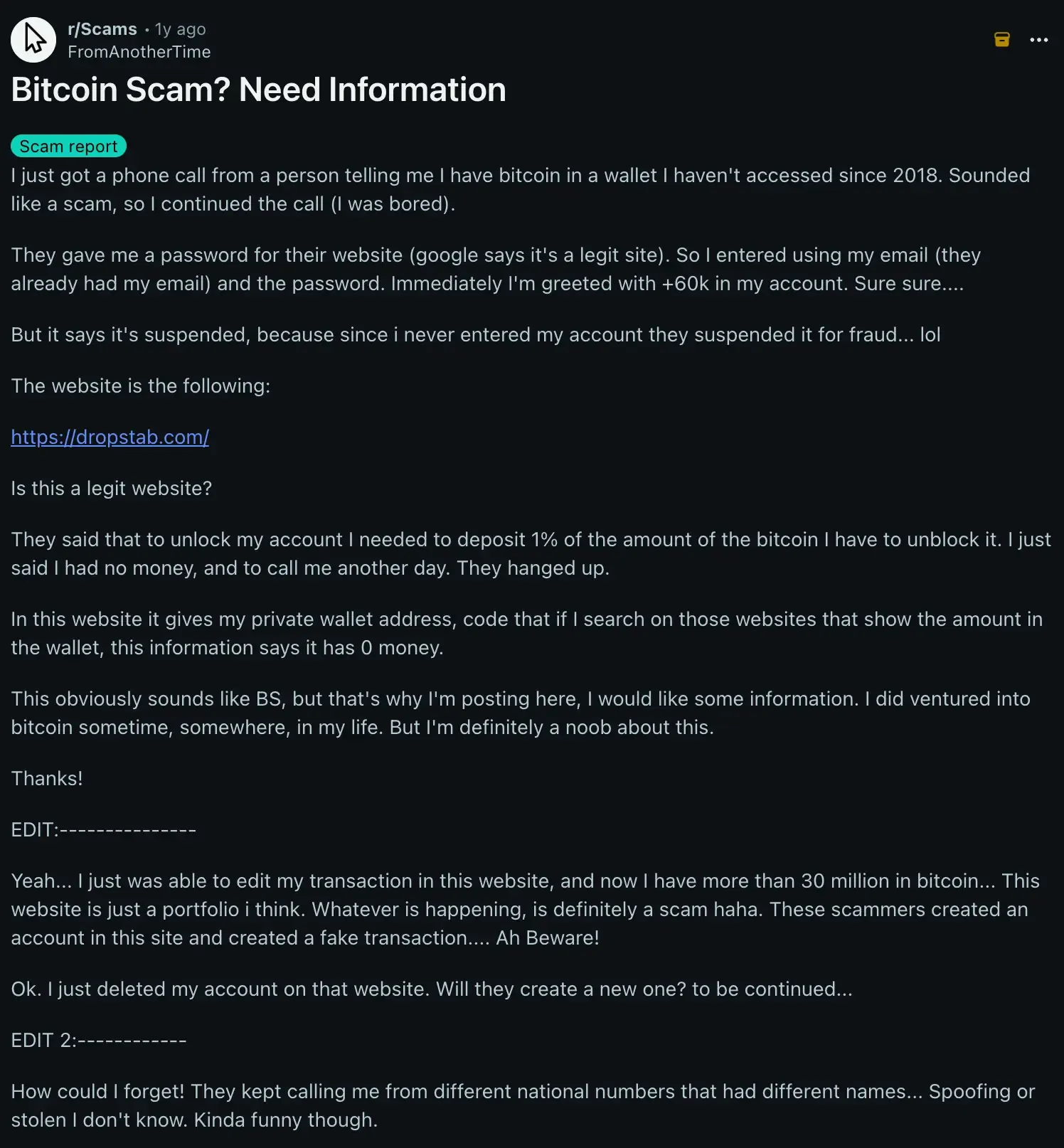
Real Example (Reddit user report):
A user received a call about “+60k BTC locked in DropsTab,” logged in, saw a fake portfolio created with his email, and later discovered every transaction was editable—confirming the entire story was a setup for a 1% unlock-fee scam.
Red flags:
- DropsTab doesn’t hold funds, so we can’t freeze or unlock anything.
- Any “fee to release your DropsTab funds” is pure fiction.
- Surprise windfalls (“you forgot about this BTC from 2017”) are bait.
- Calls, repeated messages, and artificial deadlines are pressure tactics.
Anyone saying you owe money to access “your DropsTab balance” is lying.
2. Virtual Portfolio Schemes
Scenario:
A “trader” or “investment advisor” befriends you online, builds trust, and then shows you a DropsTab dashboard with your name on it and neat, growing profits. The catch: all those numbers are manually entered. Your real money went to their wallet or a fake brokerage, not to anything controlled by DropsTab.
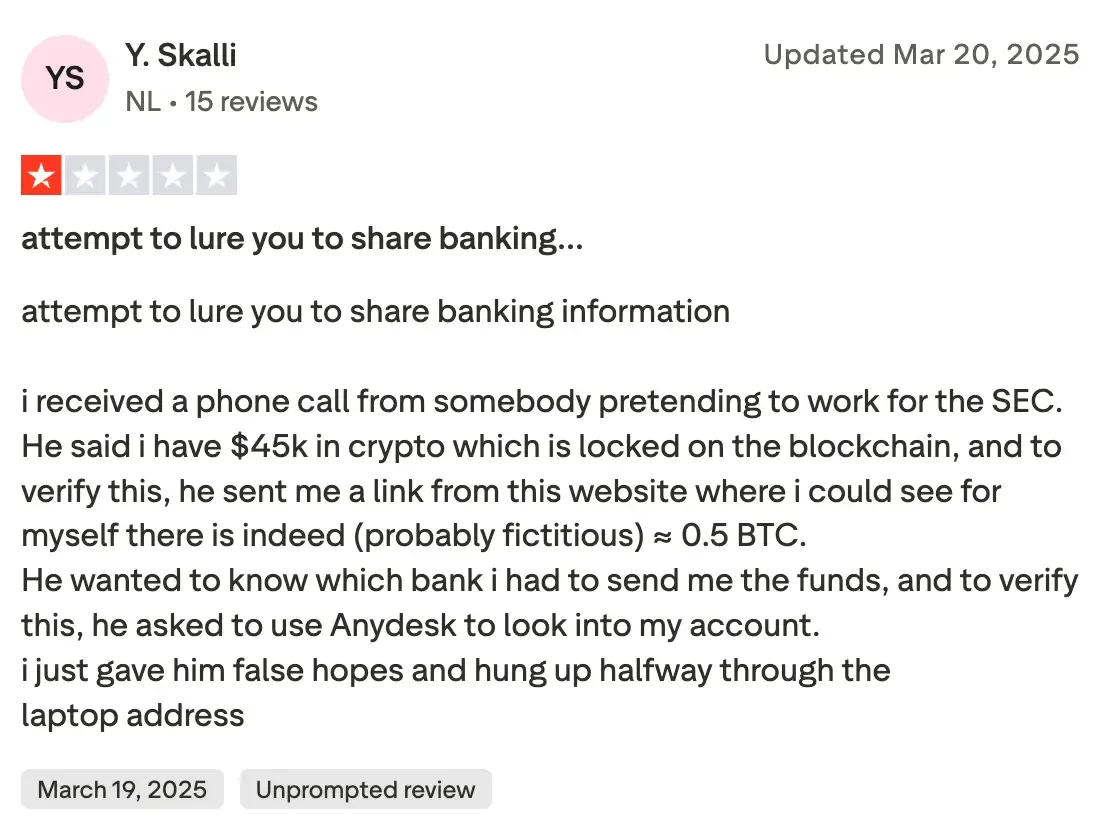
Real Example (Trustpilot user report):
A victim reported receiving a call from someone pretending to work for the SEC who claimed they had $45k in crypto waiting to be released. To “verify” the balance, the scammer sent a link to a DropsTab page showing about 0.5 BTC — a portfolio the scammer had created himself. Once the victim saw the fake profits, the caller escalated, asking which bank they used and even requesting Anydesk access to their computer.
Red flags:
- You’re asked to send funds to a personal wallet or unknown platform.
- Profits are “proven” only via screenshots or a DropsTab account you didn’t create.
If the only proof of an investment is a DropsTab portfolio you never set up yourself, assume it’s a stage set, not a balance sheet.
3. Fake Support Agents and Impersonators
Scenario:
Someone contacts you “from DropsTab support” about an urgent problem: suspicious activity, an expiring wallet, a blocked portfolio. They reach out via phone, WhatsApp, Telegram, email, or random DMs and push you to act fast — usually by sharing codes, logging into a link, or paying a fee.
Real Case from CNCIntel (2025):
A separate security report documented an impostor using a fake employee identity, blasting victims with calls from U.S. and U.K. numbers, and directing them to a fraudulent dropstab.com registration link while demanding Bitcoin payments. This has nothing to do with DropsTab — it’s the same social-engineering pattern dressed up with different details.

Red flags:
- DropsTab doesn’t run phone support or cold-call users.
- Any unsolicited message claiming to be “DropsTab support” should be treated as hostile until proven otherwise.
- They ask for passwords, 2FA codes, email OTPs, or banking details “to verify your account.”
- The tone is panicky: “act now or lose everything.”
If you didn’t start the conversation, don’t trust the channel. Ignore their links and contact us directly through dropstab.com instead. Treat unsolicited crypto “support” the same way you’d treat a random caller claiming to be from your bank: politely hang up on the story and verify it yourself.
How to Verify Legitimate DropsTab Communication
When money and “DropsTab” appear in the same message, assume it’s untrusted until it passes a few simple checks.
1. Check the sender.
Official emails come from @dropstab.com. Not Gmail, not ProtonMail, not support123@something.io. If the address doesn’t end with @dropstab.com, it isn’t us.
2. No unsolicited phone calls.
DropsTab doesn’t run a phone support line and doesn’t cold-call users. A random call or WhatsApp/SMS about your “DropsTab account” is certainly a scam unless you opened a ticket and expect a reply. Real support starts from you contacting us.
3. We don’t ask for sensitive data.
We will never ask for:
- passwords
- 2FA codes or email OTPs
- private keys or seed phrases
- credit card or bank details
To sign up you only provide an email and a password you choose. We don’t collect phone numbers, card data, or wallet addresses. If anyone claiming to be from DropsTab wants more than that, especially in a live chat or call, treat it as hostile.
4. Watch for threats and urgency.
Legit messages from us are pretty boring: verification links, product updates, security reminders. They do not threaten to close your account, call the police, or “freeze your funds” if you don’t react in minutes.
Scammers, on the other hand, lean on panic: “Your account will be terminated today”; “Last chance to save your funds”; If the tone is rushed and dramatic, pause rather than click.
5. Cross-check through the official site.
If anything feels off, go directly to dropstab.com in your browser. Use only the contact details listed there to ask, “Is this legit?” Don’t reply to the suspicious message and don’t use the phone numbers or links it provides. Scammers fabricate “support” pages and fake contact info all the time; your bookmarks and our official site are the source of truth.
What DropsTab Is Doing to Protect Users
DropsTab was never breached — scammers simply create normal user accounts and fill them with fake numbers — but we still treat any misuse of our name as serious.
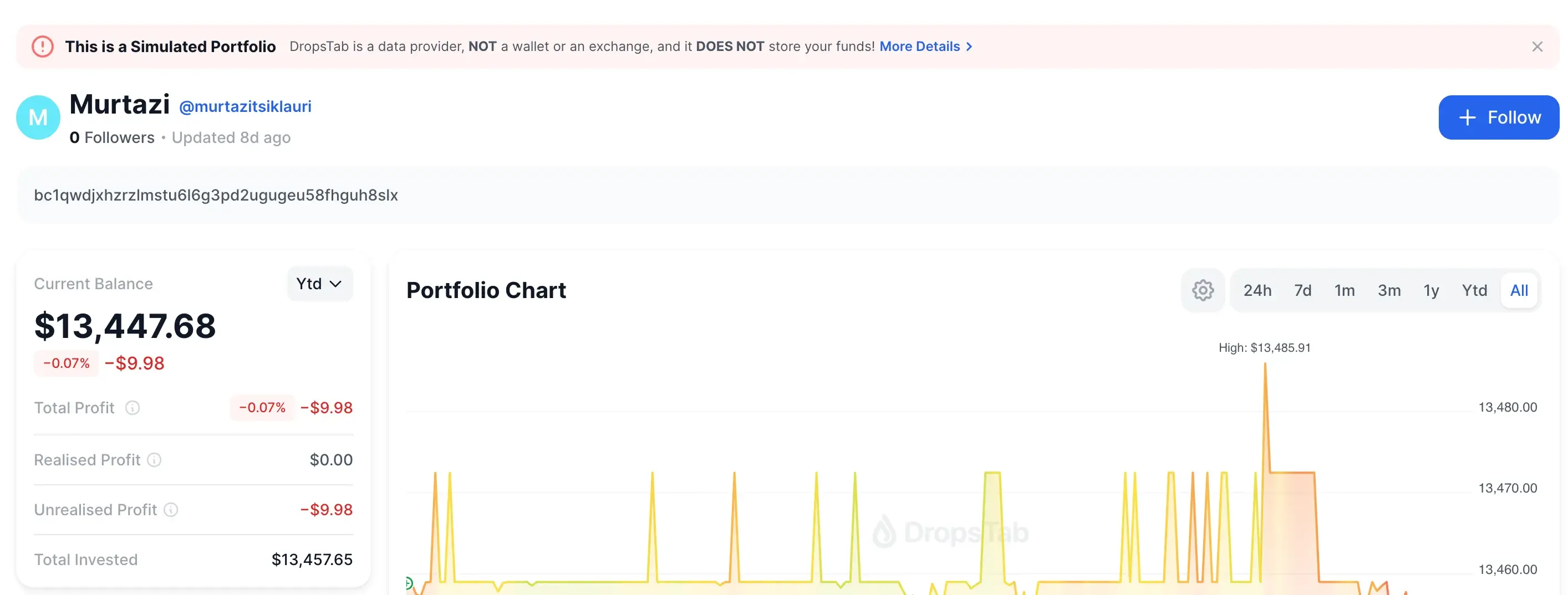
To reduce confusion, we’ve added clearer warnings directly inside the product. Every portfolio now includes a prominent “This is a Simulated Portfolio” banner explaining that DropsTab is a data provider, not a wallet or exchange, and that we do not store or manage funds. That message appears before anyone sees a dashboard, so even if a scammer creates a portfolio with fake balances, the victim is met with an immediate reality check.
Alongside that, we continue to warn users early, monitor and remove abusive account patterns, respond to reports to clear up confusion, and work with scam-tracking communities to flag impersonation attempts and push phishing domains offline. When something looks suspicious, we investigate; when users alert us, we amplify those warnings; and when broader crypto-security groups identify new tactics, we update our messaging so people know exactly how to stay safe.